The Last of a Lineage? Cormac McCarthy’s Final Novels and the American Literary Project

“The world’s truth constitutes a vision so terrifying as to beggar the prophecies of the bleakest seer who ever walked it. Once you accept that then the idea that all of this will one day be ground to powder and blown into the void becomes not a prophecy but a promise”

— Cormac McCarthy, The Passenger

That’s quite a line to come from so bleak a seer as Cormac McCarthy. For 60 years, he carved out a niche for despair in American letters, but never could quite give in. Even here, in (presumably) his last works, which raise questions to which neither the characters nor the author knows the answers, there is an undercurrent of hope. Posing the questions themselves feels like an act of faith. What questions and answers McCarthy has now, we’ll never know, as he passed away in June at 89.

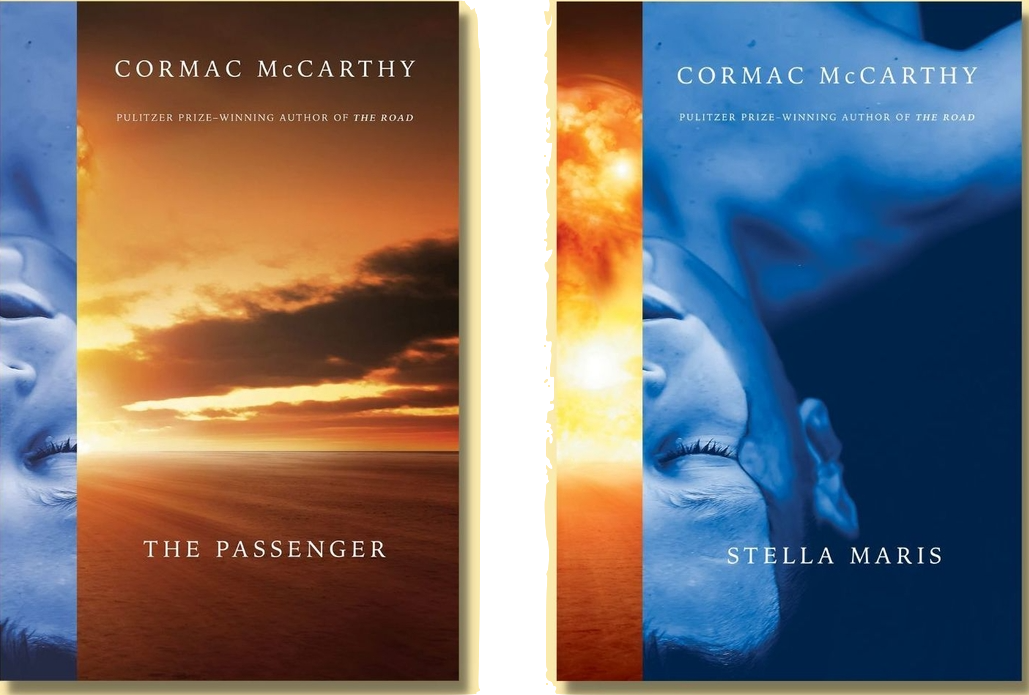
A long tradition of philosophical literature puts ideas, rather than plot, in the drivers’ seat. From Augustine to Dante to Dostoevsky to Camus, authors have explored the heart of existence through story and character, sometimes getting us to a closer view on the universe than philosophy itself. We don’t have to stare into the abyss ourselves if someone else can do it for us. Cormac McCarthy’s twin 2022 novels, The Passenger and Stella Maris, leap into this tradition with both feet. In a voice rising from what feels like a long-lost past, they speak with painful prescience to a world once again grappling with the specter of nuclear war and global upheaval. Here, mathematics, rather than logic or theology, do the heavy lifting of trying to make sense of humankind careening toward destruction by our own hand. Though certain details of these two stories abound in what follows, it would be rather disingenuous to call them “spoilers.”

Reading McCarthy vs. Reading McCarthy’s Works
Anticipation ran high for these books since the publisher announced them in early 2022—McCarthy’s first release of new work since 2006’s The Road. As with any publication from an acclaimed author, let alone unexpected titles published in his old age, the temptation is to see how they fit into his oeuvre as much as to review the books themselves. Of course, McCarthy invited this. He was always as much a “vibe” as a craftsman. Under the weight of decades of accolades (a National Book Award for All the Pretty Horses, a Pulitzer for The Road, and a Best Picture-winning film adapted from No Country for Old Men), how do we honestly assess these last offerings? You feel a certain pretense in approaching an author who has so shaped the arc of American letters. To read a synopsis of one of his books is to miss the point almost entirely. His novels have to be felt as much as read to be understood. With unblinking fixation on the darkness at the heart of men, a vast and cryptic body of allusion, and starkly unmarked prose that conjures an amalgam of Shakespeare and Hemingway, you know who you are reading from the first page.
But this is the rub. McCarthy’s work, however recognizable, is not always loved or enjoyed. He does not open on a hinge for every reader. Even Blood Meridian (1985), his hyper-violent Western now considered a masterpiece of 20th century literature, barely sold 1,500 copies in its first release and attracted minimal critical attention. His novels since then kept something of that book’s style and bleakness, teased out in drumbeat prose where punctuation goes to die, even as McCarthy grew in character development and peopled his literary deserts with at least recognizable levels of human tenderness. With these last books, readers were left to wonder both whether McCarthy still had what it takes to write a McCarthy and whether his linguistic and thematic schtick was somehow played out.

These books somehow answered both questions in the affirmative.

What we’ve been given in The Passenger is a good tale, woven with great suspense. Until, that is, the main character walks away from the plot into a spiral of lonely wandering, like a star collapsing into itself. Stella Maris by contrast, is almost a play, rather than a novel, published perhaps because it grew too long for an audience’s bodies to endure at a sitting. Both books revolve around siblings Bobby and Alicia Western with a handful of supporting characters.

Both books bounce around in time. Alicia’s suicide in 1972 forms the prologue to The Passenger, though she makes flashback appearances throughout in a narrative within the narrative, in passages set in italics. Most of the story follows Bobby some 8-10 years after his sister’s death. He largely mopes through cafes or jobsites in roving conversations with his childhood friend John Sheddan and other delightfully weird denizens of a grungy 1980s New Orleans. Bobby is absent from Stella Maris (set back in 1972 just before Alicia’s death) except in his sister’s thoughts, with the entire book taken up with a series of dialogues between Alicia and her psychiatrist, Dr. Cohen. Though the separated release dates—The Passenger hit shelves in October 2022; Stella Maris in December—would indicate that we’re meant to interpret one book in light of the other, they each work on their own, but deepened and enriched by each other.

Alicia in her scenes in The Passenger is always accompanied by a darkly comic, almost vaudevillian cast of characters led by the irreverent and malapropic “Thalidomide Kid.” We are meant to perceive these characters as hallucinations, but McCarthy played with this trope by having the Kid appear to Bobby some 10 years after Alicia’s death. Likewise, Bobby’s last major dialogue in the book is a conversation with a by-then long-deceased Sheddan, perhaps also a hallucination. Alicia questions her diagnosis of schizophrenia and asks how it is possible that such characters as she is surrounded by could simply be misfiring neurons. Why would her brain take the trouble to have such synapses appear as round and realistic personages and not just so much static? If the scenes between Alicia and the Kid sometimes feel a bit too much like a rehash of A Beautiful Mind, McCarthy’s deliberate comparison with Bobby’s life rounds things out. His world is filled with a cast of outlandish characters, too—from Sheddan himself (a prosaic and philosophical drug dealer) to traveling conspiracy theorists to a transgender nightclub entertainer who proves to be his one true confidant—leaving us to wonder if any of us can really know whether the beings we interact with on a daily basis are other humans, neurological errors, angels, or demons.

The interiority and conversational self-disclosure of both main characters felt like a new leaf for McCarthy. The spare and cinematographic narration you expect from him almost absent save for a few choice sections of The Passenger. His habit of presenting stable and wise characters as quiet and lowly—bartenders, waiters, shopkeepers, clerks, assistants—keeps the protagonists in focus by reminding us that it is the “boring” people by whom and for whom the world is made. Any heroics or self-important acts always come at the expense of those without such pretenses. The people of this book, from Bobby and Alicia on down, are not the star-crossed loners or blood-soaked phantoms of McCarthy’s southwestern novels. They call to mind, rather, his moodier Tennessee characters—wary and unsure like the Man of The Road (without benefit of an apocalyptic backdrop to distinguish them) or the despairing and self-destructive city- and river-dwellers of Suttree. Tellingly, though The Passenger takes place largely in New Orleans and Stella Maris fits entirely within the eponymous Wisconsin mental hospital, the Western siblings hail from Wartburg, Tennessee, near McCarthy’s hometown of Knoxville.

The violence that characterizes most of McCarthy’s novels is also reduced here. Instead of an inescapable cleansing fire, it appears as a gnawing sense that something is out to get us all—that, as Alicia puts it, “the world has created no living thing it does not intend to destroy.” If there is a villain in these stories it is the Western world itself, with Bobby and Alicia figured as its prodigal children, unable to escape the fate their surname condemns them to. Their father was part of the Manhattan project, inviting the end of the world for the sake of scientific exploration. Both children wrestle with the ways their father’s cavalier indifference—passed down to Bobby through a noncommittal, roving life, and to Alicia as tormented mathematical genius—bequeathed his children some sort of complicity in “Auschwitz and Hiroshima, the sister events that sealed forever the fate of the West.”

Reading McCarthy’s World
If we can’t help but read these books in light of an already-impressive body of work—a comparison which would do few authors any favors, and which has led more than a few reviewers to downplay the significance of both novels—why did McCarthy keep writing? The philosophical inquiry inherent in many of his prior novels here comes into sharp focus. He never put quite such direct musings about the nature of the world on the lips of his characters before, and it’s hard not to see Bobby and Alicia as stand-ins for McCarthy himself, an old man trying to see through a glass darkly to the fundamental reality of life.

Though for some this intellectual mooning about represents the height of “highbrow” conceit, a confirmation of the self-importance of an over-hyped author whose best work was behind him, I found this aspect of these novels incredibly moving. He asks us why we care, why we need to know how the universe works, and shows us that madness and despair lurk behind any answers to these quests we might come to on our own. The mathematical back-and-forth between characters demonstrates both McCarthy’s own genius (I had to look up numerous long-dead mathematicians and their theorems to understand parts of the dialogue, only to realize how well McCarthy grasped their work) and the fact that human language is inadequate to reality. He hints that Alicia’s downfall is perhaps because she has realized that numbers are inadequate as well, because there is no equation for love or any other peculiarly human experience.

In The Passenger, these questions come at us in narrative as much as dialogue. Bobby is a salvage diver by trade, plumbing the depths to recover what has been lost. In diving to a downed plane, he discovers a passenger (the ostensible source of the book’s title) missing. In the process he stumbles into the conspiratorial underbelly of American life and readers are left wondering who the actual “passenger” is. McCarthy seems to hint that it is a stowaway on the well-lit, easily explained train of thought we desire—a gnawing drive to make sense of the nonsensical, maybe an eruption of the repressed and collective guilt of the Western world. Perhaps the “passenger” is our conscious self, an evolutionarily unnecessary parasite that bedevils our waking hours, along for the ride to torture bodies otherwise going through the motions of survival. Bobby and his interlocutors openly wonder if perhaps the “mad” are the sane ones, calling the bluff of the universe by their ability to see what the rest of us won’t look in the eye.

Stella Maris—an intimate dialogue on ultimate things in the vein of Walker Percy’s Lancelot, Dostoevsky’s “Grand Inquisitor” in The Brothers Karamazov, or Johannes Climacus and his opponents in Kierkegaard’s works—takes us directly into the abyss. Alicia wonders if anything (the laws of mathematics, the substance of memory, the nature of dreams, the world itself) can exist without being observed. “To claim that numbers somehow exist in the universe with no intelligence to enable them,” she muses, “does not require a different sort of mathematics, it requires a different sort of universe.” How can the world of science and precision, a world where numbers can describe matter so well that we can build atomic weapons, exist if all logic and mathematics are simply “forms turning in a nameless void, salvaged out of a bleak sea of the incomputable?” McCarthy was always writing about the end of the world (in his works since The Crossing at least, with a particularly atomic flair), turning it over like a piece of quartz to see how it distorts characters from whatever vantage they encounter it. Here he stared directly into the crystal.

Ultimately, as telegraphed from the first page of The Passenger, Alicia tries to process life in light of the possibility of suicide, or at least the pursuit of a willing, welcomed death. Stella Maris is regularly interrupted with her abrupt cutting off of an hour with Dr. Cohen with the phrase, “Time’s up.” It is not enough to discover the origin of the universe if you cannot discover a compelling reason to continue to participate in it. In one particularly terrifying dialogue, she muses at length about why she couldn’t bring herself to do the deed as she had planned by drowning herself in lake Tahoe, concluding ironically that to do so would lead to the brain processing the experience as something quite like eternal suffering.

Spiritual and Material Hopes
Questions of eternity simmer throughout both books. Alicia snarks to Dr. Cohen that “the spiritual nature of reality has been the principal preoccupation of mankind since forever and it’s not going away anytime soon. The notion that everything is just stuff doesnt [sic] seem to do it for us.” Indeed, though McCarthy was never a particularly religious writer, his work brims with metaphysical and spiritual themes. If anything, he has most often been considered to operate from a gnostic framework—actually following some tenets of the ancient Christian heresy. Blood Meridian is most clearly a gnostic text, with the judge as Archon (the corrupt god of the material world), working his violent will on a world that seems to melt before him. Even the more accessible Border Trilogy sees its characters best and highest aspirations crushed by the irrepressible filth and violence that govern the world of matter. All he leaves us to anchor our peace is the acceptance of seeing the world as it is and bracing against the scourge.

But in the new books, cracks have run all through any such pietistic contentment. Here, we see the purely spiritual realm (where a true gnostic would locate the Monad or true God) inhabited by Satan—who, in Alicia’s words, “only cares about your soul. He doesn’t give a shit about your welfare otherwise.” Alicia has questions the other way around, too. “If you were a wholly spiritual being why would you dabble in the material at all? At judgment day the bodies rise? What is that about?” she asks. “Christ ascends into heaven as presumably a corporeal being. Encumbering the godhead with a thing it had not previously to endure. It’s hard to know what to make of such lunacy.”

This embodiment, this lunacy, seems to be what the melancholy Westerns crave, and what the people who they allow to get close to them offer, however incompletely. The world may be doomed, waiting for nuclear holocaust, but characters don’t look for this as the cleansing of the world to pure spiritual reality. Rather, they pine for security, for some secret knowledge that would instead take them back to a reality where they are safe with the ones they love. Sheddan intuits that “the trouble of the world is those who never figured out how to weep,” that it is the pure scientists who have worked the end of the world, not the humanists. Nature may be cruel, but only mankind would end up twisting matter to destroy all things.

Bobby & Alicia’s bond is too close, each the other’s only true spiritual companion. McCarthy frames Alicia’s death as an attempt to save Bobby, who has been in a coma, because she reasons that if doctors can’t find his next of kin, they can’t pull the plug. For his part, when he wakes up to discover Alicia has died, Bobby can’t really find anything to live for, elevating grief to an art form, as Sheddan notes. Maybe embodiment is a curse, after all, to two brilliant individuals barred from living the life they long for by the accident of birth. Try as they might, the Westerns cannot transcend this state, but they look for communion beyond the grave. McCarthy paints Bobby as “the last pagan on earth” who waits to see Alicia again “face to face” on the day of his death. Alicia, in her last scene, asks Dr. Cohen to hold her hand, “because that’s what people do when they’re waiting for the end of something.”

Though they don’t know it themselves, these are people longing for resurrection. When Dr. Cohen asks Alicia if she thinks of herself as an atheist, she quips, “God no. Those were the good old days.” Even the place where Alicia goes to seek refuge, Stella Maris, was founded as a catholic hospital named for Mary “Star of the Sea”—an ancient association between the God-bearer and the North Star, a shining marker for all those looking for home. When the ghost of Sheddan appears to Bobby near the end of the Passenger, he practically issues an altar call: “Mercy is the province of the person alone. There is mass hatred and there is mass grief. Mass vengeance and even mass suicide. But there is no mass forgiveness. There is only you.”

McCarthy’s characters are always running (or drifting, or floating, or riding) from something, but in the end, they are all also chasing something they know not what. What they all seem to be straining toward, however dimly and stumbling, is a world remade with the horror and loss and absurdity we all experience wiped away and replaced by a somehow familiar, somehow unfathomable glory. And that sense of a “right and Godmade” world, as McCarthy’s narrator in The Crossing might put it, has always loomed behind the violence and death of the one he wrote about, demarcating its borders and burning brightly somewhere beyond it.

Assessment
Though I think these two books fit, and provide a fitting bookend to McCarthy’s distinguished career, I don’t know that I’d recommend them as an entry point to his work. They are thematically dense, interwoven with odd material (including a long discourse on the Kennedy assassination in The Passenger) in lieu of a clear plot, and pockmarked with casual racism and sexism—albeit from ostensibly hallucinated characters.

For those who have read, or even cherished, McCarthy’s work, The Passenger and Stella Maris both confirm and confront his corpus. How do we sift through our experience with an author we’ve appreciated when he crafts something so different? Is the unresolved nature of the plot and the characters’ story arcs beauty, or madness, or both? The occasion of new work invites a review of the whole.

I should shudder to say that I “understand” McCarthy. At the very least, I sense a wavelength of humming dread in his books that connects with me at a sometimes-discomfiting level. I can’t help but to read him, because he was willing to gaze at aspects of the modern soul that few authors wanted to call attention to. I always want to know what McCarthy saw, what he wanted us to look at, and how he wanted us to look, because I know I’m missing something about the nature of the world when I find it too easy to explain. Here, at what seems to have been the end of his writing life, he winked back at those of us still paying attention to tip his hand: “And of course it’s true that any number of these books were penned in lieu of burning down the world—which was their author’s true desire,” he has Sheddan say. “But the real question is are we few the last of a lineage?”

Who is going to take up the project of the “great American novel” as a means of seeking truth now that this great practitioner of the effort has laid down his mantel?
A Bit on #Barbenheimer

Dear reader, I’ve been writing more lately at Substack. It’s just proving to be a simpler, more community-oriented platform to work with. That means that those of you who have been reading me here have been left out in the cold, and I’m sorry. I’ll try to crosspost a few more things more regularly. For now, enjoy this piece on a couple of recent movies, published at Substack under the title “Of Fantasies and Tragic Flaws.”

Rachel and I had the rare chance to go (kid-free) to not one but two movies this weekend. The #Barbenheimer phenomenon was too much to resist. Both films were astonishing feats of what is possible with a big-studio movie in the hands of a capable writer-director given free rein. Both drew out some incredible performances; both leaned hard into all-encompassing sets and costuming. Though very different, both are great films and worthy of going to see (give Hollywood a reminder that the universe doesn’t have to be comic book movies all the way down).

After a couple of days to reflect, I’m still somewhat surprised that, of the two films, I liked Barbie more. Yes, it was constrained to the box Mattel allowed for it, but Greta Gerwig managed to craft something cry-laugh funny and replete with pop-culture references (that felt laser-targeted to us as “elder Millennials”). It also had quite a surprisingly deep heart, if a bit didactic at times. Satire is precisely the right tool for some messages.

If you know me, you know what a history and science nerd I can be, so what I said above surprised me. I am literally the target audience for Oppenheimer. And it was 99% what I hoped it would be. I can’t remember the last time I felt so emotionally drained leaving a movie theater. Christopher Nolan’s work shines as a study of power and the machinations of power on the most epic of scales, but…

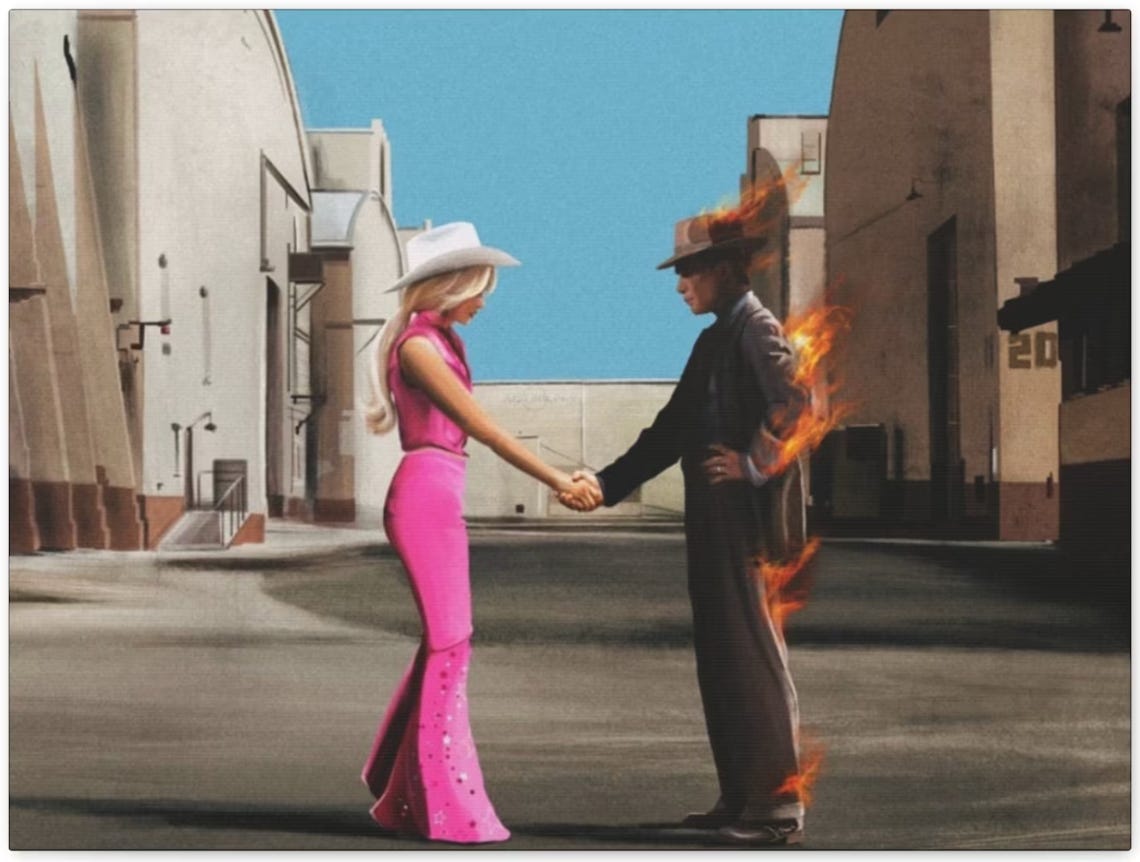
A made up poster (courtesy Designsvault on Etsy)

**Some spoilers for both films beyond this point!**

Continue reading

2022 in Pages

It’s the end of another year in which I read quite a few books—some by eye, some by ear; some by choice, some by requirement. As with each year’s list (see 2021, 2020201920182017, 2016, and 2015, for reference), these are not necessarily books released in 2022 (though several are), but books that I encountered this year. Short reviews follow for a few, clustered around some broad categories.

As a seminary student (with a full-time job and four kids), I also always want to give a special shout-out to our library’s excellent selection of audiobooks (via services like Hoopla and Libby) that I listen to on my daily commute and weekly trips back and forth between Chattanooga and Atlanta, without which I would not get to go through nearly as many desired books as I’d like. Also, I don’t put all my seminary assignments here, but some do rise to the surface of recommended reads.

Christian Theology and Practice

You’re Only Human by Kelly M. Kapic (2022)
This book was a great blessing, and exciting to see out in the world after the years of thought and study my friend Kelly has put into it. For too many Americans (and American Christians), life on a human scale, with grace and patience toward our shared weakness, has not been on our collective radar. This book calls us to reflect on and love our limits. Kapic focuses our attention on the doctrine of creation. He wants us to see ourselves as God does—embodied creatures, with inherent, designed limits on our presence, mobility, time, health, etc. that lead us to depend upon our Creator and each other. Designed limits that resist our attempts to live beyond them show us that vulnerability, weakness, and fragility as features, not bugs, in the human condition. He zeroes in on union with Christ as the spiritual reality to which our designed dependence points, on how the incarnation itself “is God’s great yes to his creation, including human limits,” and takes great care to separate the notion of humility (literally, being close to the soil from which we were formed) from our sinfulness and depravity.

See my full review at Mere Orthodoxy.

Art and Faith by Makoto Fujimura (2020)
Books on art have a way of being unintentionally pretentious. For those who’ve never studied art or would be confused by what they’re seeing at a museum or gallery, thinking about capital-A “Art” can be overwhelming. What Fujimura, an accomplished and celebrated artist in the Japanese Nihonga (or “slow art”) tradition, pulls off in Art and Faith is an invitation to explore the essential role of creative expression in our humanity—whether our “art” is “Art” or some other means by which we bless the world. He offers a loving, biblical call to generative creativity as the soul of what it means to bear God’s image. For those who practice the Arts, he offers encouragement to seek after truth and liturgies of creativity that flesh out a theology of making. Fujimura also commends the role of artists as “border stalkers” who see the gaps and ragged edges of our communities and practices and urges the incorporation of the artists’ way into the life of the church for the life of the world.

New Seeds of Contemplation by Thomas Merton (1949)
I’ve somehow managed to avoid reading Thomas Merton until this year. I suppose that’s a bit of a hangover from my Protestantism and its suspicion toward any sort of monasticism and mysticism as valid expressions of faith. It’s probably also rooted in a distrust of Americans writing books on spirituality, which have always felt more marketed than meaningful to me. I can’t judge the full corpus of his work, but what I took in this year (his memoir The Seven Storey Mountain, this book, and several recorded collections of his classes to the novitiate at Gethsemani) have convinced me that all those who recommend Merton have been on to something I missed out on primarily through my own stubbornness. New Seeds is astonishing both for its depth of insight into the ways we distract ourselves from the work of God (sort of an unironic, positive version of The Screwtape Letters) and its practicality in insisting that the contemplative life is not a special super-spirituality reserved for a few but an ordinary part of what it means to pray, to love God, and to obey His will. Really something.

The First Advent in Palestine by Kelley Nikondeha (2022)
Kelley Nikondeha calls us to look at the familiar contours of the story of Jesus’ conception and birth with fresh eyes. She looks through a lens that most Protestant Christians are deeply unfamiliar with, but which loomed large in the cultural imagination of all the participants in the advent story—the intertestamental period. These histories cover the families of Mattathias and Judas Maccabeus during the reign of the Seleucid Empire, a time of cruel oppression, violent uprising, and cycles of internecine brutality among the oppressed. Nikondeha situates the story of the Maccabees in the context of lament and the longing for a full, post-exile restoration, calling readers to see that “wrestling with suffering is the predicate to God’s deliverance.” This shines new light on the context in which Zechariah and Elizabeth, Mary and Joseph, the Magi, Herod, and all the other players were operating within. At each point in the story, Nikondeha also connects people and places on the pages of Scripture with contemporary counterparts in present-day Bethlehem. Overall quite a unique book—part exegetical reading of the New Testament, part travelog, part memoir.

See my full review at Englewood Review of Books.

The Lord Is My Courage by K. J. Ramsey (2022)
K.J. Ramsey and her husband Ryan have been Internet friends of ours for several years, and we finally got to actually hang out in person this summer thanks to the hospitality of a dear mutual friend. Her first book This Too Shall Last (2020), on the faithfulness of God in the midst of chronic illness, is a beautiful prayer for embodied faith that eschews easy answers to pain. In The Lord is My Courage, she explores the dynamics of spiritual abuse (along with the inhuman pace of modern life and inhuman expectations of many of our expressions of following Jesus) through the lens of her training as a trauma-informed therapist and the words of divine comfort in Psalm 23. Ramsey offers an invitation to attend to our bodies, the social dynamics we inhabit, and the people God places in our paths so that we can listen closely to what stories we are being told in light of God’s story of who we are in Christ. The contrasts she unpacks here—encounter vs. exploitation, striving vs. rest, abuse vs. shepherding, closing off vs. spacious generosity, etc.—are a word of blessing and challenge.

P.S.—Look for her follow-up collection of poems and prayers, The Book of Common Courage, due out in January 2023.

History/Biography

The Great Exception by Jefferson Cowie (2016)
I didn’t read as much history this year as I often do, but this short history of the New Deal (which came recommended by the podcast most likely to make me read new books, The Road to Now) was a good reminder of why I find the field so helpful at giving context to the problems we deal with today. In this relatively short work, Cowie presents a high-level overview of the political and socioeconomic shifts from the Gilded Age and Progressive Era that made the New Deal coalition (labor, business, and government in some degree of cooperation) possible, and how the centrality of Southern Democrats to the coalition meant enforced exclusion of black Americans from the benefits of most programs. He also includes an effective summary of how post 1970s political realignments represented not so much a “revolution” of libertarian values but a regression to the mean of individualism and largely unregulated financial and business interests that has characterized most of American history. Because it was published before the election of Donald Trump and the upheavals of the covid-19 pandemic, etc., it retains a good bit of explanatory power of the baseline dynamics of the American electorate without the breathless urgency of more recent commentary.

Fundamentalism and American Culture by George Marsden (2005 ed.)
Marsden’s overview of the development of Protestant Fundamentalism in the 19th and early 20th centuries (and the “re-fundamentalization” of American evangelicalism in the latter decades of the 20th century) is a classic of modern church history. If you’ve wondered about the ways the church fractured and re-congealed after the upheavals of the Civil War and the rise of a secular humanism founded on evolutionary theory and the ideal of progress (and what that has to do with contemporary church conflicts), this is your book. What sticks with me most, though, is Marsden’s incisive epilogue (which I wrote about some here). He says that “the theologian’s task is to try to establish from Scripture criteria for determining what in the history of the church is truly the work of the spirit,” whereas the historian, while keeping the big picture in mind, refrains from making judgments “while he concentrates on observable cultural forces.” In doing this, Marsden says, the Christian historian “provides material which individuals of various theological persuasions may use to help distinguish God’s genuine work from practices that have no greater authority than the customs or ways of thinking of a particular time and place.” The work of the Christian historian is, it seems to me, a vital part of any healthy church.

Unruly Saint by D.L. Mayfield (2022)
I very much enjoyed this unconventional biography of an unconventional woman. Dorothy Day’s witness against the spirit of antichrist present in the exploitation of laborers and the poor is an important, but often overlooked, theme in the story of the United States. Mayfield’s introduction to Day focuses on the earlier years of her life—her participation in the “Lost Generation” literary scene, troubled marriage, adult conversion, and the founding of The Catholic Worker—presenting a Day of tireless efforts, radical views, and a contentious relationship with the church she loved. Mayfield sets out not to write a comprehensive biography, but to introduce contemporary readers to Day’s work, encouraging them to engage with her own writings. In this, I think she succeeds. As Mayfield concludes: “[Day] is one of the ancestors who guides us, cigarette in one hand and a cup of coffee in the other, saying to us, ‘Never stop asking why, and never stop hungering for God. The loaves and fishes will miraculously appear, but only if you surround yourself with those who are hungry.'”

Sociology/Philosophy/Psychology/Cultural Observation

The Fire Next Time by James Baldwin (1963)
There is probably not another writer who so deftly captures the soul of a nation at a moment in time like Baldwin does here. It is as damning, insightful, and hopeful 60 years hence as it was when it was written. These letters to Black and White America on the centenary of the Emancipation Proclamation are a poetic, prophetic call to discard the mask of peace worn at the expense of justice and repair the damage wrought on the soul of a nation by slavery, Jim Crow, and white supremacy before we reap the whirlwind. We still haven’t fully heard his message.

Teaching to Transgress by bell hooks (1994)
In my day job, we focus a lot on adult education for lower-income learners. Much of that work is drawn from the dialogue education theories of Paolo Freire. The late bell hooks was one of Freire’s premier interlocutors in the U.S. education scene, taking his philosophy farther by subjecting it to a healthy feminist critique and arguing for a more democratized classroom style for all levels of learning. This book is filled with insightful reflection on a variety of topics in critical pedagogy, particularly her work on the need for theory to match lived praxis. Embodying the content of what is being taught is vital to both teachers and learners. I don’t often hear hooks work referenced in theological education, but it is perhaps especially vital there, and she has certainly helped shape my style in facilitating courses through my job, as well as teaching Sunday school and hosting other discussions.

South To America by Imani Perry (2022)
I’m always a sucker for a good travelog, as it allows a writer to explore a variety of topics using the map (and the particular proclivities of a given location’s culture) as a point of departure for roving discussions that may not otherwise fit together. Perry’s tender-yet-critical, genre-bending work (part memoir, part history, part treatise) paints a picture of the U.S. South, with its rich culture and tortured history of race-based brutality and economic hegemony, as a fountainhead and centerpiece of American life rather than an aberration or outlier.

The Soul of Shame by Curt Thompson (2015)
I read three books by Curt Thompson this year (this one, as well as Anatomy of the Soul and The Soul of Desire) as part of a growing interest in neurobiology as a helpful tool for cultivating curiosity and compassion toward myself and others. Christians have often pushed against psychology and psychiatry as fitting helpers in the process of emotional sanctification, and we reject the common grace of research like what Thompson presents to our detriment. In particular, his discussion of emotional attachment and attunement illuminates in greater detail the process by which biblical commands to “trust in God” (e.g. Ps. 20:7) are accomplished. This book, positing that shame is a product of the Fall, provides a very helpful rubric for understanding the effects of sin and brokenness on our self-understanding and our relationships.

Literature/Poetry/Memoir/Criticism

Everything Sad Is Untrue by Daniel Nayeri (2020)
This was the year this book took off, and I feel like everyone I know has read it or put it on their to-read list. As a practiced cynic toward all things popular, I was prepared to be underwhelmed. Instead, this has been better than anyone could describe to me. I can’t really do it justice either. To tell what it is “about”—a refugee story told in the style of a sort of young-adult 1001 Nights with humor and verve and astonishing pain and beauty—doesn’t get you any closer to experiencing it. I don’t have any more words. Just read it, or better still, listen to the author-read audio version. So, so good. So funny, so rich, so deep.

A Hole in the World by Amanda Held Opelt (2022)
There is a lot going on in the world, much of it hard and painful, much of it lovely and joyous, often all at once. How do we live in the face of it? My dear friend (I’ve known Amanda for 20 years now!) has wrestled beautifully with this tension. Walking through deep hurt isolates and disorients, but pretending it is not there, as we are often expected to, does nothing for our wellbeing or for our neighbors’. Grief and sorrow call us to attend to one another, sharing burdens without adding new ones. How we live toward one another in the midst of pain and loss is something too few of us have considered. The unprocessed grief of our collective losses as a nation (throughout our history, but especially over the past 2-3 years) leave us lashing out, in a stupor, or terrified. Amanda’s work capturing and applying rituals of grief from across the globe and across the centuries is a balm and a blessing. Someday we all die; we all bury loved ones; we all suffer under the weight of a broken world. Learning to lament, to grieve well, must be found anew. Acknowledging the hole in our world that death represents makes space for the wonder that there is still life in the midst of it.

See a great full review by my wife, Rachel, in Fathom Magazine.

The Scandal of Holiness by Jessica Hooten Wilson (2022)
I really liked this book, not just because it prompted me to read and re-read some fantastic novels, but because it reminded me why and how I ever learned to read literature in the first place. Jessica Hooten Wilson builds on the longstanding tradition of finding moral instruction in literature by exploring how fiction can shape people not just into virtuous citizens, but into the very likeness of Christ. Through the lens of several twentieth and twenty-first century novels, she guides readers toward a beatific vision of sorts, calling them to contemplate the lives of literary saints. We cannot be made to all love the same books, and we may not all find the same gifts in each one, but Wilson endeavors to hold the door open wide. For every reader, there is a story ready to captivate and transform, and Wilson offers the tools needed to look for Christ without subjective application or limiting God’s witness to a book list of her choosing.

See my full review in Fathom Magazine.

This Here Flesh by Cole Arthur Riley (2022)
Just like with Everything Sad Is Untrue, I find myself at a loss for words in describing Cole Arthur Riley’s This Here Flesh. If I were forced to pigeon-hole it, I’d say it’s something of a meditative memoir, but equally as much poetry, folk storytelling, prayer, and manifesto. She writes with a rare candor and economy, exploring the terrain of racial injustice, spiritual abuse, chronic health issues, and family trauma with acute spiritual insight.

Tomorrow and Tomorrow and Tomorrow by Gabrielle Zevin (2022)
Contemporary fiction isn’t always my cup of tea, but as someone who still nurses the hope of writing some fiction someday, I do try to stay up on current trends of what people are reading. This one came highly recommended (and it won a Goodreads readers’ choice award!), and it to be creative and heartfelt, a story of love and friendship from inside the (foreign to me) world of gamer culture. As such, this was a bit outside of my genre comfort zone, but this geriatric millennial was sucked in from the very first Oregon Trail reference.

Re-reads

“We do not enjoy a story fully at the first reading. Not till the curiosity, the sheer narrative lust, has been given its sop and laid asleep, are we at leisure to savour the real beauties. Till then, it is like wasting great wine on a ravenous natural thirst which merely wants cold wetness.” – C.S. Lewis, “On Stories” 

On The Incarnation by Athanasius of Alexandria (ca. 318)
This fall’s reading through the Paideia Center was a book I’ve read three other times, but I was more than thankful for the opportunity for a fourth trip through Athanasius’ meditation on the necessity, wonder, and elegant logic of the coming of the Son of God in the flesh of Jesus of Nazareth. I jokingly say that I participate in this reading group to remember that I love theology (i.e. no one is grading me on it here), but it’s really true. On the Incarnation is a case study in what thinking deeply for the sake of joy and truth looks like. It does not occur to me often to say that something must be true about God because it is beautiful or untrue because it is improper, but Athanasius puts on these categories of thought with ease, and in the process challenges us to take God’s revelation of Himself on His own terms rather than rushing to categorize Him so that we have an “answer” we no longer need to dwell upon. God is an inexhaustible well, and we do not come to understand or encompass Him, only to draw near to Him through worship with all our minds, hearts, souls, and strength.

The Christian Imagination by Willie James Jennings (2010)
Jennings work has been a gift and a challenge on so many levels. I read this book years ago on my own, and wished then that I’d had a community of learning to debrief with. I got that opportunity this year through a seminary class. Jennings is a capacious thinker, simultaneously dense and elegant, bringing hundreds of years of theological and sociological work to bear on grasping the evil of separating peoples of the earth from their lands and (too frequently) their humanity. This he calls “a theological mistake so wide, so comprehensive that it has disappeared, having expanded to cover the horizon of modernity itself.” His discourse on the pedagogical modality of the development of colonialism is astounding—taking knowledge out of the frame of discipleship and putting discipleship in the frame of knowledge instead, such that following Christ must look like an intellectual, European, scholastic theological mode of engagement.

The Space Trilogy (Out of the Silent Planet, Perelandra, and That Hideous Strength) by C. S. Lewis (1938, 1943, 1945)
I’ve not read Lewis’ “fairy tale for grown-ups” for some time, and I picked it back up to see if I felt like picking That Hideous Strength for my next book club selection. Though I ended up going a different direction for that choice, I enjoyed the world-building and playfulness Lewis brought to this series. It lacks much of the tenderness and narrative sensibility of the Narnia books, but is a lot of fun as an intellectual exercise. Some of Lewis’ unkind (or at least shortsighted) views on gender show up here in ways central to the storyline, which I’d not noticed as much on previous readings. Overall, however, his vision of where scientific determinism might take the world (even before the atomic bomb and the full revelation of the horrors of the holocaust) remains prescient.

The Wounded Healer by Henri Nouwen (1972)
The more I think about what the pastoral vocation looks like, the more I think it is something that can’t be cordoned off to a select few, but should be part of the way each of us embody the way of Jesus. What Nouwen reminds us of here is that the character required for pastoral care cannot be learned or earned, but must be given through partaking of suffering. The art of presence is the practice of empathy without centering your own brokenness. It takes so much work it takes to extend ourselves the grace God offers in the midst of our pain, but this is the crucial feature of growth—holding our pain without rushing to assign it a special significance is vital to creating the capacity to hold the pain of others from a place of genuine love.

Also-reads

These books are not “second class” in any way, I just can’t review ’em all. Listed here in alphabetical order are all the other books I also read in 2022. As a reminder, you can also find me on goodreads.com for more regular updates, as well as brief reviews of all these titles.

A Church Called Tov by Scot McKnight and Laura Barringer
A Long Obedience in the Same Direction by Eugene Peterson
A Spacious Life by Ashley Hales
Ain’t I A Woman? by bell hooks
Anatomy of the Soul by Curt Thompson
And Then There Were None by Agatha Christie—REREAD
Anxious People by Fredrik Backman
Attached to God by Krispin Mayfield
Begin Again by Eddie S. Glaude
Broken Horses by Brandi Carlile
Burning Bright by Ron Rash
Celebrities for Jesus by Katelyn Beaty
Cities of the Plain by Cormac McCarthy
Crying in H Mart by Michelle Zauner
Exclusion and Embrace by Miroslav Volf
Far from the Madding Crowd by Thomas Hardy
For the Life of the World by Miroslav Volf and Matthew Croasmun
For the Time Being by W.H. Auden—REREAD
Heaven and Nature Sing by Hannah Anderson
How to Be Sad by Helen Russell
In the Time of the Butterflies by Julia Alvarez
Mark As Story by David Rhoads & Donald Michie
Men and Women in Ministry: Four Views by Robert and Bonidell Clouse
Recovering from Biblical Manhood and Womanhood by Aimee Byrd
Redemption Accomplished and Applied by John Murray
Rescuing the Gospel from the Cowboys by Richard Twiss
Rich Christians in an Age of Hunger by Ron Sider
Shoutin’ in the Fire by Danté Stewart
The Passenger by Cormac McCarthy
The Pastor by Eugene Peterson
The Remarkable Ordinary by Frederick Buechner
The Seven Storey Mountain by Thomas Merton
The Soul of Desire by Curt Thompson
This Too Shall Last by K.J. Ramsey—REREAD
What Are Christians For? by Jake Meador
Wintering by Katharine May

Books of the Year that Was (2021 ed.)

Another year (“really, it’s only been a year?”) has come to an end, and it’s time for another list of books. As with each year’s list (see 2020201920182017, 2016, and 2015, for reference), these are not necessarily books released in 2021 (though some are), but books that I encountered this year. Short reviews follow for a few, clustered around some broad categories.

As a seminary student (with a full-time job and four kids), I also always want to give a special shout-out to our library’s excellent selection of audiobooks (via services like Hoopla and Libby) that I listen to on my daily commute and weekly trips back and forth between Chattanooga and Atlanta, without which I would not get to go through nearly as many desired books as I’d like. Also, I don’t put all my seminary assignments here, but some do rise to the surface of recommended reads.

Christian Theology and Practice

Prayer in the Night by Tish Harrison Warren
Warren has a gift of quietly, simply putting her finger on the way deep truths are waiting at the edge of the everyday. Her first book (The Liturgy of the Ordinary) sought these out in the mundane joys and habits of life at the scale of home and family; Prayer in the Night looks for them in the moments of sorrow, suffering, and unfulfillment. Weaving personal experiences and illustrations with the liturgy of Compline, she offers up a plea for the practice of turning to God in the dark, of making prayer from our fear, pain, and anxiety as well as our thanks, praise and longing.

Redeeming Power by Diane Langberg
In the midst of the heartbreaking, seemingly never-ending stream of revelations of physical, sexual, emotional, and spiritual abuse within the church over the past several years (which, let us be clear, are likely only distinguished from past times by enhanced opportunity in an information age for victims to speak out), Diane Langberg has been a voice of consistent, faithful application of Christian doctrine to the issue of abuse. In this book, she aims at the root, providing skillful and hard-won (from decades of counseling and mediation experience) reflection on what it means to exercise power as image-bearers of God. In a world where power is more often used to crush, oppress, abuse, and obscure than to serve and uplift, those of us who claim the name of Jesus ought to be living out the way of the New Jerusalem, not wallowing in the worst excesses of our fallenness.

Talking Back to Purity Culture by Rachel Welcher
I first “met” Rachel Welcher through her work as poetry editor for Fathom Magazine (where she has graciously published a couple of my poems this year), and decided to read this book she published last year. Both my wife and I were blessed by this winsome, frank, reflection on the beauty of the biblical sexual ethic. In particular, her meditation on the ways Christians have often deeply harmed others (and the reputation of Christ) by ham-fisted attempts to communicate and enforce that ethic was spot-on. You cannot separate sexuality from the overall call to holiness and faithfulness in community that the church represents. I am certainly the target audience (someone who came of age and went to church youth group during the 1990s purity movement), but Welcher makes her case with tender pastoral care that makes it applicable to others, both younger and older. This has also given us many tools for thinking through how to help shepherd our four daughters through adolescence and toward adulthood with honesty and hope.

The Liturgy of Politics by Kaitlyn Scheiss
If there has been a common thread among Americans (based on the small sample of American humans I know and spend any degree of time with), all of us are deeply political. Few of us, though, have spent too much time reflecting on how our faith in Christ affects our political views and actions, and even fewer of us are deeply attentive to how our politics is affecting our faith. In this succinct and helpful overview of the spiritual and cultural formation at work in our political life, Kaitlyn Scheiss pokes at the particular idols that pull on our hearts in this sphere, and the ways that the good news of the kingdom of God knocks these down. She summarizes much of the weighty scholarship on this topic into accessible language (if, perhaps, making a few sweeping generalities along the way) and actionable strategies for keeping Christ over our political predilections and not the other way around. If churches could get members from various social/political camps to read this together and discuss, some real growth and health might result.

You Are Not Your Own by O. Alan Noble
Noble makes no less of a bold claim than that modernity (broadly, the Enlightenment: secularism, individualism, political self-determination, and technological and economic insulation from many physical demands of life) runs in many ways counter to God’s design of human beings. Nowhere, he suggests, do we feel this disjointedness more acutely than in the crushing demand of perpetual identity formation and maintenance. He examines the lay of the land through contemporary sociological research, philosophy (Ellul, Taylor, and others), and literature (Eliot, Plath, and others) to demonstrate the ultimate hopelessness of self-belonging, and then points us back to union with Christ as the stable ground of life. There is a lot of pastoral wisdom here, as Noble provides some helpful categories for analyzing 21st century social ills in ways that the church is designed to respond to and digs up ways the church itself has (unconsciously and consciously) adapted to the present age through modes of Christian practice that actually work to undermine identity in Christ.

History/Biography

A Burning in My Bones by Winn Collier
I was a latecomer to Eugene Peterson—the finished version of The Message came out while I was in college; while I edited a couple of magazines for pastors, I watched review copies of his Spiritual Theology series roll in, but never gave them a reading (or column space). That changed last fall, when, in a dry period of spiritual life in the muddy middle of a seminary program, a tough season at work (and, you know, a global pandemic and domestic political crisis), I decided to pick him up. That spiritual theology series (Christ Plays in Ten Thousand Places, Eat This Book, The Jesus Way, Tell it Slant, and Practice Resurrection) was a balm to my soul. In these books, I found a richly scriptural work on what it means practically to follow Jesus, and I’ve recommended them to lots of people since. Reading this biography gives contour to the ways Scripture and experience shaped Peterson into a person who could, in his 70s, write such healing words to me. Collier shows us a driven, but patient, man—someone with a capacious academic mind, a deeply pastoral heart, and varied interests, who could have just as easily become a poet or a butcher or a carpenter as a pastor and author—whose burning ambition, recorded over and over in the privacy of his diary was to become a saint. May we all be so motivated.

Buried in the Bitter Waters by Elliot Jaspin
As he recounts story after story of county-wide racial purges through the 1880s-1930s (which often include horrific terrorism, lynching, and acts that in any other context would be described as open warfare), Jaspin unveils another facet of white Americans’ history of calculated resistance to co-existence with descendants of enslaved men and women as social equals. This fine piece of journalistic digging and historical inquiry is another step in the painful but life-giving process of remembering grievous national sins that many of my own ancestors would have preferred never come to light.

Paul: A Biography by N. T. Wright
I’m sticking this here so as to sneak in another theology read into a different category, but, as the title implies, it’s also an apt resident of the biography column in its own right. Wright has crafted what essentially amounts to a roving commentary on Acts and the Pauline epistles, trying to tease out the character and motivations of Paul the man through what we have preserved in Scripture of his comings and goings and his own words. In the process, he makes a fine case for understanding the character and practice of the early church as rooted in the Old Testament/second-temple Judaism.

The Outlier by Kai Bird
Most presidential biographies have something to teach about character, organizational leadership, etc.; they’re not just for “history junkies.” Bird’s work does not disappoint on either count. He gives good context to explain how the unpopular Carter presidency bridged the turmoil of the late 60s, Vietnam, and Watergate to the relative stability of the 80s and 90s, with a commitment to doing what needed to be done, political consequences be damned. Carter’s promises to do what was right and tell the truth (along with his work ethic, grounded idealism, and engineer’s mind) was what the country wanted in the wake of the aforementioned turmoil, but those commitments (which he fulfilled with remarkable consistency) and character traits in the face of intense economic and foreign policy challenges forced many decisions that angered the establishment and various voting blocs, which swept him out of office with gusto. It is little wonder that fair-minded, decent, honest people often stay out of politics—either you become as corrupt as a the systems you seek to reform or you stick to your guns and fall flat on your face. The silver lining is that history takes a longer view than election cycles, and Bird demonstrates that many of the successes for which later administrations took credit (curbing inflation, deregulation of airlines and utilities, reduction of dependency on foreign oil and gas) actually flowed from Carter’s actions. This, interestingly, is where Bird focuses, with the significant humanitarian and diplomatic achievements of Carter’s post-presidency given only scant attention in the book’s epilogue.

Sociology/Cultural Observation

Strange Rites by Tara Isabella Burton
The notion that Western Culture is no longer defined predominantly by Christianity is today a banal truism obvious to nearly everyone except those with a vested interest in turning anxiety and nostalgia into a political movement or fundraising pitch. What is more interesting is how G.K. Chesterton’s aphorism that “when men cease to believe in God, they don’t believe in nothing; they believe in anything and everything” plays out in this new reality. Though at times it gets a little too close to the handwringing tone of decline narratives, Burton’s Strange Rites explores just this phenomenon. Through engaging journalism and deep forays into the plethora of emerging subcultures of belief (from Wiccans to Harry Potter fanclubs, and even darker corners of the soul), she humanizes the turbulent religio-cultural waters we’re swimming in today in ways that churches would do well to think on as we seek to retell the story of Christ in ways that actually make sense to our neighbors.

Taking America Back for God by Samuel Perry and Andrew Whitehead
I’d wager few people had heard the term “Christian nationalism” before this year, but it’s hard not to see it everywhere once you start thinking about it. Perry and Whitehead present a rigorously researched examination of the religious impulse in American politics (across the political spectrum and, across generations) that effectively demonstrates both that “Christian” Americans are not a monolithic voting bloc and that “Christian” politics and actual adherence to the way of Jesus do not often overlap. If you’re looking for a book-length op-ed, this will disappoint you, though. It is essentially a thoughtful and (mostly) dispassionate discussion of sociological findings, complete with regression analyses and methodology descriptions.

The Death of Adam by Marilynne Robinson
Robinson is most celebrated as a Pulitzer-winning novelist, but I’m often moved just as much by her essays, which often probe beyond cliche to expose rich veins of wonder hiding in plain sight. In this collection, she tries to take up the minority report of the liberal project, pushing back against the the various “isms” of the past three centuries to hold space for a more expansive view of reality. In her own words: “We assume that nothing is what it appears to be, that it is less and worse, insofar as it might once have seemed worthy of respectful interest. We routinely disqualify testimony that would plead for extenuation. That is, we are so persuaded of the rightness of our judgment as to invalidate evidence that does not confirm us in it. Nothing that deserves to be called truth could ever be arrived at by such means. If truth in this sense is essentially inaccessible in any case, that should only confirm us in humility and awe.”

The Sum of Us by Heather McGhee
Even most people who dispute claims of systemic racism in contemporary America would concede that Jim Crow policies of past decades did indeed represent systemic and systematic oppression of people based on the color of their skin. What McGhee demonstrates here is how those legal and social structures born out of past racial animus and racist policy are drivers of social, economic, ecological, and other problems that today afflict people of all ethnicities in the U.S. Though I’m not confident that the policy solutions to these entanglements are as simple and straightforward as she seems to believe, this is an insightful work worthy of consideration.

Literature/Poetry/Memoir/Criticism

Americanah by Chimamanda Ngozi Adiche
Trying to read more contemporary and international literature is hard when you only read English (maybe Spanish in a pinch—not much contemporary literature is being written in biblical Hebrew or Koine Greek). Adiche’s story of young lovers separated by continents amid political upheaval in Nigeria is a well-rounded tale (save for some uncritical acceptance of contemporary Western sexual mores that, for me at least, leads to some inconsistencies within characters) that weaves anti-colonialist, anti-racist, and feminist themes into its cultural exegesis of British, American, and Nigerian societies and subcultures as skillfully as the braiders whose shop supplies the setting of much of the narrator’s reminiscence layer strands of hair.

Diary of a Country Priest by Georges Bernanos
Like many of my favorite mid-20th-century Catholic novels (and I have a thing for mid-20th-century Catholic novels), This is really a theology book, but one that presses deeply into the nature of vocation, the humility of faithful service, suffering and death, and the disconnect between culture-bound churches and the way of Jesus. What Bernanos achieves through this simple, first-person narration of a life of seeming insignificance is luminous.

Hannah’s Child by Stanley Hauerwas
Stanley Hauerwas is one of those people that sticks up to give a splinter to anyone making sweeping statements about the state of American theology—he doesn’t fit too cleanly in any category (he once called himself “a high-church anabaptist”) and has always embodied a delightfully contrarian posture toward the main stream of Christian political and ethical discourse. In this memoir, we see him as an old man sifting through the streams of his life looking for clues as to how he became who he is, from a low-income upbringing in Texas to the heights of the American Academy. His perseverance through decades-long marriage to a woman slowly succumbing to debilitating mental illness is heart-wrenching. His self-effacing tenor is by turns incisive and humorous, and filled with quips of wisdom you’d expect from any self-respecting grandpa.

Norwood by Charles Portis
What a strange, funny little novel. The plot is pointless, the characters aren’t very lovable, and yet, I don’t hate it. Like in his most famous work, True Grit, Portis demonstrates his facility with idiosyncratic characters capable of accomplishing unbelievable feats through single-minded devotion. Whereas True Grit‘s Mattie Ross is a heroine rising above her age and gender to pursue justice, Norwood Pratt is an antihero, bumbling his way through other people’s stories to get payment on a minuscule debt in a way that perfectly captures the self-interest and pointless consumerism inherent in so much of American life.

The End of the Affair by Graham Greene
Again, given my affinity for (obsession with?) mid-20th-century Catholic fiction, you’d think I’d have read this one before. I didn’t like it as much as I thought I should, however. It is good, but so earnest and bleak that it almost doesn’t work for me as a novel. It is not as delicately wrought as Brideshead Revisited or quite as viscerally powerful as Greene’s own The Power and The Glory, both of which cover similar themes of wayward souls brought back to the heart of Christ at the end. Somehow, though, it manages to do what these novels do so well—depicting spiritual transformation without trivializing or sermonizing—a rare skill worthy of celebration.

Re-reads

“We do not enjoy a story fully at the first reading. Not till the curiosity, the sheer narrative lust, has been given its sop and laid asleep, are we at leisure to savour the real beauties. Till then, it is like wasting great wine on a ravenous natural thirst which merely wants cold wetness.” – C.S. Lewis, “On Stories” 

Jayber Crow by Wendell Berry
I’ve been a Berry fan for over 20 years, but was slow to warm to his fiction. Re-reading this novel (which I still consider his finest), I liked it much more than the first time around, largely (I think) due to the fact that the world it records is even further from the experience of most today. When I read it first, my grandfather, born in 1924, was still living on his family land outside a small Georgia town where he’d been born. His sister, born in 1918, and her husband, born in 1914, still had their wits about them, telling stories of the Great Depression, working with the CCC, and life before cars and television. Now they’re all gone, and so Berry’s fiction evokes memories of memories and helps me appreciate his skill as a tale-spinner. Jayber Crow is a work of remembering, of setting a human being within a web of knowing and being known. Its exploration of the inner life of one man, his wrestling with questions of faith and hope and unrequited love give it a texture that transcends any untoward preachiness, even as Berry’s standard themes of the decline of rural American life in the wake of the economic, social, and technological upheavals of the 20th century are entwined throughout.

Orthodoxy by G.K. Chesterton
Revisited this (after having first read it 15 years ago) at the urging of a friend. It holds up so well—brimming with joy and wonder while giving modernity a cheeky middle finger. It is the rare work of apologetics that achieves its goal—making the author’s “side” appear winsome instead of just seeking to anger the “enemy.” The palindromic aphorisms Chesterton is so fond of do get old after a while—It’s clearly his favorite stylistic move, and repeated ad nauseam throughout. This is not a real quote, but its structure gives the sense: “The blubbering idiots claim they have the truth, but the truth is that it was always idiots blubbering.”

Surprised by Hope by N. T. Wright
I think this book should be required reading for the church. Re-reading it for the first time since it came out in 2008, I’m struck both by how much of my life and ministry work is shaped by these (robustly biblical) arguments. Wright contends that many Christians cling to “going to heaven when you die” as an escape from the world instead of embracing a theology of resurrection that sees the risen Jesus as the first fruit of God’s ultimate redemption and the church’s mission as proclaiming Christ’s dominion over all. In short, he firmly believes that we are “saved to” service for the glory of God as much as we are “saved from” sin. Wright is at his finest as he attempts to ground the church’s efforts in the present day (from evangelism to social justice, art, and conservation) solidly in resurrection theology and liberate them both from modernist progressivism (which places the emphasis on the work instead of God) and traditional evangelicalism (which sees Christian ethics and vocation mainly as an addendum to saving souls for heaven).

The Brothers Karamazov by Fyodor Dostoevsky
This rambling journey through the souls of a small Russian town hits hard as ever. The problems of faith, identity, and purpose that the characters wrestle with are evergreen, and felt more keenly today by more people (I’d wager) than they were when Dostoevsky wrote. It’s a book that, though it takes hours upon hours to read, demands multiple readings to even begin to glean its riches. This time around, however, what sticks out to me most is the theme of grace—of extending (or withholding) open-handedness toward the mistakes and anxieties of one another in light of what we shall all be some day before God. As Alyosha explains near the end, “Certainly we shall all rise again, certainly we shall see each other and shall tell each other with joy and gladness all that has happened!”

Their Eyes Were Watching God by Zora Neale Hurston
In revisiting Hurston for the first time since college, I’ve learned much more about her overall life project of preserving folkways and folktales from now nearly-extinct groups across the South, as well as her refusal to allow her work to be co-opted into political or social causes that she felt would diminish its artistry. These layers of nuance give her enduring parable of the Black experience in America a deeper, more studied resonance. Their Eyes Were Watching God is allegory of the highest caliber, with some of the sharpest narration in all of American literature.

Also-reads

These books are not “second class” in any way, I just can’t review ’em all. Listed here in alphabetical order are all the other books I also read in 2021. As a reminder, you can also find me on goodreads.com for more regular updates, as well as brief reviews of all these titles.

A Little Book for New Theologians by Kelly M. Kapic
A Year of Biblical Womanhood by Rachel Held Evans
Canary in the Coal Mine by William Cooke
Congratulations, Who Are You Again? by Harrison Scott Key
For God So Loved, He Gave by Kelly M. Kapic
He Saw that It Was Good by Sho Baraka
Jesus Feminist by Sarah Bessey
Lost in the Cosmos by Walker Percy
Moral Man and Immoral Society by Reinhold Niebuhr
Reparations by Duke Kwon and Gregory L. Thompson
Suffering and the Heart of God by Diane Langberg
The Book of the Dun Cow by Walter Wangerin, Jr.
The Committed by Viet Than Nguyen
The Deep Places by Ross Douthat
The Great Sex Rescue by Sheila Wray Gregoire
The Making of Biblical Womanhood by Beth Allison Barr
The Parable of the Sower by Octavia E. Butler
The Pedagogy of the Oppressed by Paolo Freire
The Ponder Heart by Eudora Welty
The Rise and Triumph of the Modern Self by Carl Trueman
The Story of Christianity, Vol. 2 by Justo L. González
The Unsettling of America by Wendell Berry
The Violent Bear it Away by Flannery O’Connor
Virgil Wander by Leif Enger
Wholehearted Faith by Rachel Held Evans & Jeff Chu
Why We Drive by Matthew Crawford