Walker Percy Weekend

You see the pig first.

Smoked and shimmering in all his suckling glory, he leads the way into a church hall set up for a meal considerably more lavish than your average dinner on the grounds. The crowd eases in a few at a time, shaking out their umbrellas, glazed with the sticky cool of a summer night’s rain. As they descend on the spread, the gears of conversation engage (with a little help from the wine) and old friends and former strangers talk long into the night, humidity and horseflies not withstanding.

All this Louisiana cuisine and conviviality could be the scene of a birthday party, anniversary, or graduation. The guest of honor is not here, though, having died 26 years hence. Even so, it was his 100th birthday, and so we came. From all over, we came to St. Francisville for the third Walker Percy Weekend.

Must this not be what every author dreams of? Posthumous recognition such that when people who have been touched and challenged by your work come together to remember you, it is not in self-important tut-tutting about your cultural impact but simply to make merry and rejoice that you wrote.

Between the freely flowing bourbon and the mountain of mudbugs on Saturday night, it just might have been possible to forget this was a literary event (“conference” isn’t quite a fit), but the superb panels by friends and family and Percy scholars from universities around the country, with lots of questions and comments from the crowd, brought out the best for readers. Everything from the collapse of the political center to the depths of despair in Dostoevsky to Springsteen (yes, that one) was on offer. Even the depth of discussion over cocktails and crawfish was a sight to behold.

The civic spirit of this little town in West Feliciana was really on display, too. If the banners lining Ferdinand Street proclaiming “We Love It Here!” were so much boosterism, nothing in the joyful hospitality of the locals I met gave it away. They put on the dog for us all, opening homes, churches, shops and public spaces in one long roving feast for body, mind, and spirit.

I think Walker would be proud of his fellow Louisianians, and probably more than a little annoyed at being the center of attention. By God’s extravagant grace, in this little corner of “the old violent beloved U.S.A. and of the Christ-forgetting Christ-haunted death-dealing Western world” all was well for a few days. The troubles Percy saw so clearly tearing us apart could melt away, all suffused in the glow of summer sweat and steam from a trailer vat of boiling crustaceans.


Chocolate Memories

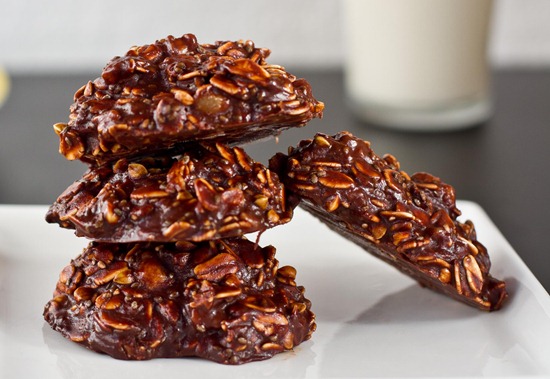
To bring a solid thing to a rolling boil works
Unspoken magic atop the stove. Combining
Butter, sugar, cocoa, oats, vanilla, milk irks
Some with its simplicity, but births such shining
Chocolate gibbosity that even gourmands
Cannot help themselves from begging for a second.
No proper name for such delectability;
“Sludge” we called it, homage to its amorphous glands,
A foul word would disguise tasty heights, we reckoned.
Childhood on wax paper is pure gentility.

Cookies

Into the Woods: Conasauga Lake and Grassy Mountain

Location is everything.

Chattanooga is where it is because of the conveniences of transportation. It’s where the Tennessee River cuts through the wall of the Cumberland Plateau, and the city built up around this natural intersection between boats and rails during the early industrial era. That made it quite the prize during the war between the states, and it’s the crossroads of the South even still—a 2.5 hour drive or less from Atlanta, Knoxville, Birmingham, and Nashville. Much of the traffic between the Southeast and the Midwest passes through here, giving us more traffic woes than a city of this size warrants. Two of the top 10 largest trucking corporations in the U.S. are headquartered here, and we’re still known around the world for a catchy tune about a train ride.

All of that to say, living here makes getting other places a fairly easy proposition, so much so that a drive over to the western edge of the Appalachians for a day hike isn’t much trouble at all. On clear days from certain vantage points around town, you can make out the profile of Big Frog, Cowpen Mountain, and Grassy Mountain shooting up from the valley floor about 40 miles to the east. They are the westernmost “real mountains” (+/- 4,000 ft. above sea level) in the country until you get to the Black Hills.  Continue reading

Because I Said So: Hard Truths as Signs of the Covenant

Follow me” has always been God’s call, from Adam to Noah to Abraham to us. It’s not always worded so simply as Christ put it, but the meaning is the same. We are each of us prodded to go “out, not knowing where [we are] going…looking for the city which has foundations, whose architect and builder is God” (Heb. 11:8, 10). Leaving the comfort of the familiar was not our idea, both the destination and the journey are wholly in His hands.

We can almost get behind such faith sheerly for the adventure of it all. We follow God and He promises to bless us. You don’t have to read too much farther, though, before the stakes grow higher: “This is my covenant, which you shall keep, between Me and you and your descendants after you: every male among you shall be circumcised. And you shall be circumcised in the flesh of your foreskin, and it shall be the sign of the covenant between me and you” (Gen. 17:10-11). “Sure, Lord, I’ll follow you anywhere! Wait, you want me to do what?”

Abram obeyed (even at age 99!), but we now look back on the terms of that covenant as mysterious, more than a bit grotesque, and mercifully a part of the ceremonial law which no longer binds us: “But he is a Jew who is one inwardly; and circumcision is that which is of the heart, by the Spirit, not by the letter…” (Rom. 2:29).

The fact remains, though, that the Lord often attached apparently “strange” conditions to His dealings with His people. In His grace, we can see through Scripture how obedience to those conditions was God’s plan to show His power. Joshua at Jericho and Gideon against Midian  must have struggled mightily with God’s conditions for their “military strategy,” but the beauty of the Lord’s powerful victory rises like incense from the pages of these accounts.

Likewise, under the new covenant, we are given things to obey from God that stand in sharp contrast to the world (baptism and communion, for instance) and may or may not make sense from any earthly perspective. There is great purpose in them, but from our finite vantage, it may be that the only purpose we can see is for us to obey in full faith, even when we don’t understand. These things become for us, in the language of Genesis, “sign[s] of the Covenant,” showing our calling through obedience to the distinctive and otherworldly commands of our Lord.

To those standing outside of the household of faith, large swaths of God’s truth simply don’t add up. There are always passages in Scripture (at times more, at times less) that make the obedience of believers stand out like bats at noonday amid the prevailing culture. These things are good and right, designed by God for much more than disagreeableness, but we will always be pressured to downplay their significance, nurturing quiet hope that theologians will conjure a convincing path to ignoring them altogether.

Contrary winds now buffet us in standing up for many things which we as Christians take for granted (that marriage is sacred or that God made men & women different from one another). Rest assured, though, that if we give in to the culture on their current full-court press, they will merely begin to push on another. Practically all of God’s utterance is under attack somewhere or other—even the merest suggestion that there is a God or that a reality exists and can be known is enough to get you thrown out of most “respectable” institutions and associations.

In all of this, of course, God is not toying with us but trying us, fitting us for His kingdom. Without opposition, we grow comfortable, and the cultures most stultifying to the Gospel are those which provide the least incentive for Christians to distinguish themselves as such. When we endure shame on His behalf, we should be stirred to boldness for the core things of the Gospel, camping out upon the stumbling block.

We are called to believe things that will never make sense to a sinful world—God makes it that way to keep us humble and honest, but also because such things are so. A “Follow me” from Christ may sound to our friends and neighbors instead like a voice commanding us to “Be weird”. We proclaim a slain and risen lamb, a virgin birth, a sinless savior, the high priest who is our sacrifice; if we hide in shame from God’s subordinate truths, how can we proclaim His excellencies in full?

Holding on to the hard truths is in its way a sign of His covenant with us. We must trust Him when doing so is made difficult by sin and circumstance just as surely as we do when Scripture makes our hearts sing. “Because I said so” is not a sophisticated rationale for obedience but the refrain of a Father who loves His children. Without an obedient trust willing to accept that call as sufficient, how will we get to the truly hard things that come of following Christ: loving our enemies, giving beyond our means, and taking the Gospel to the uttermost parts of the earth?

Even the world itself exists merely because He said so.