Hope and Hazards: A Vision for Family–Part 1

I have neither qualification nor desire to lay another “how-to” straw on the bending back of my fellow parents. Given that raising children is my daily life right now, writing about it from time to time is inevitable. For those of you likewise on this roller-coaster, I offer the following as encouragement, food-for-thought, and the beginning of discussion.

When God grants us stewardship of the next generation, our first and longest task is to remember why. Pursuing that, every other responsibility begins to take form.

As long as men and women have borne children, we have sought to control the outcome of the juggernaut that is “growing up.” Surely even Adam and Eve, raw to their new world of sin and death, wanted the best for their sons—somehow to escape the chains of evil fixed from the womb. Their firstborn murdered his brother, unleashing thousands of years of horror among the rest of their descendants. Children, always the repository of our hopes and dreams, have a fair shot at becoming instead withered cisterns of our fears, disillusionment, and re-enacted mistakes.

Just as often, however, the results come back positive. The rub comes as we wrestle with how to determine one product over another. We all know perfectly wonderful people who sprang from the cradles of awful parents. Likewise, we know those parents who “did everything right,” yet managed to go to their graves panged by the choices of one or more wayward children. Perhaps this sword pierces your own heart also.

Parents are pulled taut in every direction, preyed upon from all corners by those nourished on their fears. A thousand voices cry out, promising the cure for uncertainty—this diet, that discipline scheme, this medication (or avoidance thereof), that education method, my routine, will set you free—delivering your offspring safely to well-adjusted adulthood. Do this, and you’re off the hook. No sooner does one of these fads gain traction with the hopeful masses than a counterinsurgency roars to life, cleansing again the temples of parenthood.

Would that it were this easy.

Would that it were this easy.

Thus distraught, manipulated, and marketed to, what are parents to do? Finding ourselves as still-young men and women vested with this incredible responsibility, the pull to choose a parenting camp and do battle on their behalf is strong. Many (most?) of us hesitate, though, with mounting doubts. Fear closes in whenever silence allows, outmaneuvered only by fatigue. Like Elijah, we find ourselves despairing in the cleft of the mountain, doing our best to ignore the quotidian earthquake and tune out the whirlwind of “solutions.” But the still, small voice breaks in yet, calling us to take courage for He has not forsaken us. Continue reading

Technopoly, Sourdough, and Worship

Neil Postman didn’t set out to write theology when he published Technopoly back in 1992, but I’ve seldom read theology that more accurately describes man and his flight from God. His classic critique of the unexamined acceptance and celebration of technology has helped me see just why it is that I find it so difficult to worship, pray, and otherwise give God His proper due in my daily life.

Technopoly_The_Surrender_of_Culture_to_Technology

Though I confess to more than a few Luddite sympathies, I’m not (and nor was Postman) strictly “anti-technology”—broadly defined, technology (from the shepherd’s staff and the farmer’s plow on up) can be a tremendously useful piece of our mandate to fill the earth and subdue it. Still, he urges caution, reminding us that the things we create to make our lives (ostensibly) easier and better always have unintended consequences, ranging in severity from the annoying to the catastrophic. Even the purported goods of a technology often reshape our world in ways that cause us to sacrifice skills and wisdom to its given mode of operation.

In particular, reading Postman illuminated three things for me.

First, his idea of “invisible” innovations (i.e. things which once did not exist but now slide below our radar as part of “the way things are”), like the numeral zero, chemical contraception, or antibiotics, alter our concepts of space, time, reality, and control. It’s easy for us to be wary and skeptical of big, visible technologies (say, atomic weapons), but it’s often the little things that have the biggest impact on our thinking over time. His ideas here have found eerie vindication in recent years as neurological studies have shown how our brains are actually “rewired” by the technologies we employ (see herehere, and here for just a few examples). We have to be careful to consider the implications and consequences of every new technology we allow into our lives, and this takes time, research, thought, and prayer.

Technopoly provides a good reminder that Marshall McLuhan’s warning that “the medium is the message” is as true as ever–in the technological realm. We are always tempted to accomplish every task presented to us by means our favored gadgets (or schools of thought—even our categories for ideas are a technology of sorts). To a man wielding a hammer, it’s nails all the way down. This gives Christians wishing to “engage the culture” a warning to avoid doing so through any means that demeans the message of the Gospel or reduces it to the same level as trivial things. There is a level at which the Word of God and Christianity as a whole will never be welcome within a fully technological world because such an establishment can have no other gods before it.

Continue reading

Moviegoing and Ministry

Originally from my blog at Disciple Magazine.

American culture thrives on the grandiose. “Bigger is better,” “Go big or go home,” “Too big to fail,” and the like are our taglines of choice. Anything we do is bound to be better if you toss a “mega”, “super”, or “hyper” out front.

Neither is the Church immune to this phenomenon (witness “megachurches” and “celebrity pastors” in case you have any doubts). It cuts across theological and denominational lines, to the point that we are not even aware of it or how it colors our witness. An implicit code demands every event or project we undertake be thoroughly planned, promoted, hyped, executed, well-attended, and measurable. If any step of that procedure is given short shrift, we question whether anything “really” happened.

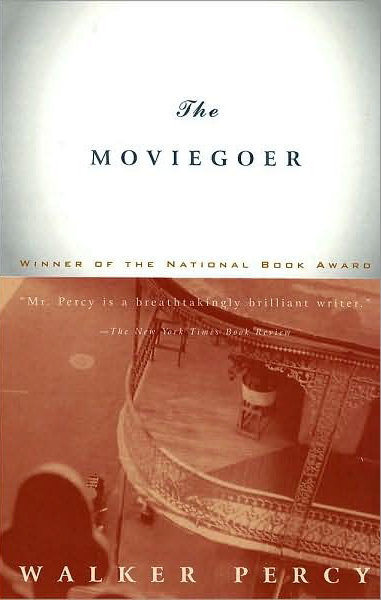
Over 50 years ago, novelist Walker Percy fingered the wrist of post-WWII America to find this idea pulsing within.

In The Moviegoer, Percy paints his protagonist, Binx Bolling, as a dislocated individual—lost in suburbia and the art of moneymaking, yet oddly ill at ease with nearly every aspect of existence. Binx seeks significance and transcendence in watching and re-watchiyoung_moviegoerng popular movies; the shared world of mass culture is more real to him than anything else. Through Binx (and one scene in particular where William Holden’s presence brightens an otherwise dull afternoon in the French Quarter), Percy describes how people and places are authenticated, not by their actual nature, but only when they are acknowledged by the transcendent reality of Hollywood.

This desire for worldly significance, to be on the radar of the kingmakers of politics and mass media, afflicts almost all Americans, and it has only metastasized since Percy first diagnosed it. Only rarely do we see it outright; more often it seeps into our thoughts and actions with hidden designs for otherwise innocent and noble work. Continue reading