Why do so many Protestant writers on the numinous (or even the religious) come across disingenuous, cloying, or false? If, as Joseph Bottum and others have suggested, the novel is essentially a Protestant art form, why is it that those who take the Bible most literally and believe Reformed doctrine most fully write fiction most dreadfully?
Of course, there are manifold exceptions (Defoe, Austen, Brontë, etc.). Perhaps the better question is to ask why the world of doctrine and spiritual life, of a real and active God, so brilliantly articulated in Protestant sermons so often fails to animate our works of fiction? Bottum argues that the form itself, so encoded with the Protestant understanding of the individual’s relationship to God and the world (in which the inner, spiritual life is paramount), collapses under its own weight when too self-consciously attempting to portray spiritual realities. He writes, “To write a Protestant novel is, instead, to do something a little unnecessary, a little verging on the redundant. And when a deliberately Protestant novel fails, it often fails because it seems didactic and preachy, engaged in what the art form itself promises that readers can take for granted.”
In the twentieth century, particularly the post-war era, the literary voices in Britain and America most able to capture the realm of faith were overwhelmingly Catholic—Graham Greene, Evelyn Waugh, Flannery O’Connor, Walker Percy, William M. Miller (A Canticle for Liebowitz). The best “Protestant” writers of the period were mostly secular in life and work—Robert Penn Warren, Harper Lee, William Faulkner, Eudora Welty, etc. Serious Protestant writing flowered in extremes of abstraction or concretion: poetry (Eliot and Auden) and theology (Lewis, Stott, etc.).

Looking heavenward in a material world.
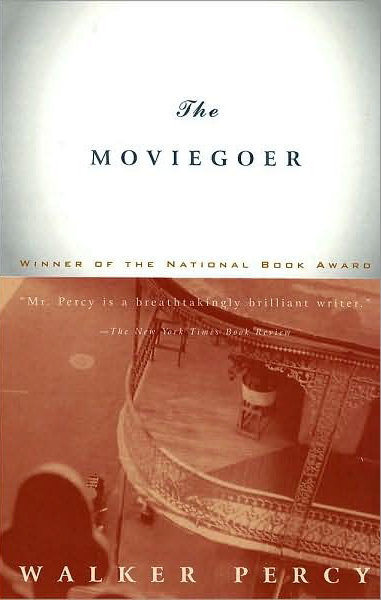
Among these Catholic writers, themes of faith are handled in very different ways. Greene’s The Power and the Glory is a very Catholic story about a very bad Catholic, but God comes across convincingly (though subtly) as the main actor. Miller imagines how the Church can continue and rebuild society after a nuclear holocaust. O’Connor’s short stories are memorable for the violent intrusion of grace into the lives of smugly self-satisfied characters (through the theft of an artificial leg in “Good Country People” or a high-velocity book to the forehead in “Revelation”). Waugh and Percy’s characters (Charles Ryder, Binx Bolling, Will Barrett) explore dead-ends of selfish personal fulfillment, reaching beautiful resolution by the merest hint at conversion.
Why in this barbaric, scientistic, hypersexualized modern world (to which Scripture has so much to say) have Catholics rather than Protestants (particularly Bible-drenched evangelicals) handled the interaction between God and Creation so much more believably? This is a line of questioning that I’ve wrestled with for a long time (as a member of that most insufferable class–aspiring writers) and one that seems of peculiar importance in a day that promises less and less attention to traditional modes of Christian discourse.
 Hardscrabble