Because I Said So: Hard Truths as Signs of the Covenant

Follow me” has always been God’s call, from Adam to Noah to Abraham to us. It’s not always worded so simply as Christ put it, but the meaning is the same. We are each of us prodded to go “out, not knowing where [we are] going…looking for the city which has foundations, whose architect and builder is God” (Heb. 11:8, 10). Leaving the comfort of the familiar was not our idea, both the destination and the journey are wholly in His hands.

We can almost get behind such faith sheerly for the adventure of it all. We follow God and He promises to bless us. You don’t have to read too much farther, though, before the stakes grow higher: “This is my covenant, which you shall keep, between Me and you and your descendants after you: every male among you shall be circumcised. And you shall be circumcised in the flesh of your foreskin, and it shall be the sign of the covenant between me and you” (Gen. 17:10-11). “Sure, Lord, I’ll follow you anywhere! Wait, you want me to do what?”

Abram obeyed (even at age 99!), but we now look back on the terms of that covenant as mysterious, more than a bit grotesque, and mercifully a part of the ceremonial law which no longer binds us: “But he is a Jew who is one inwardly; and circumcision is that which is of the heart, by the Spirit, not by the letter…” (Rom. 2:29).

The fact remains, though, that the Lord often attached apparently “strange” conditions to His dealings with His people. In His grace, we can see through Scripture how obedience to those conditions was God’s plan to show His power. Joshua at Jericho and Gideon against Midian  must have struggled mightily with God’s conditions for their “military strategy,” but the beauty of the Lord’s powerful victory rises like incense from the pages of these accounts.

Likewise, under the new covenant, we are given things to obey from God that stand in sharp contrast to the world (baptism and communion, for instance) and may or may not make sense from any earthly perspective. There is great purpose in them, but from our finite vantage, it may be that the only purpose we can see is for us to obey in full faith, even when we don’t understand. These things become for us, in the language of Genesis, “sign[s] of the Covenant,” showing our calling through obedience to the distinctive and otherworldly commands of our Lord.

To those standing outside of the household of faith, large swaths of God’s truth simply don’t add up. There are always passages in Scripture (at times more, at times less) that make the obedience of believers stand out like bats at noonday amid the prevailing culture. These things are good and right, designed by God for much more than disagreeableness, but we will always be pressured to downplay their significance, nurturing quiet hope that theologians will conjure a convincing path to ignoring them altogether.

Contrary winds now buffet us in standing up for many things which we as Christians take for granted (that marriage is sacred or that God made men & women different from one another). Rest assured, though, that if we give in to the culture on their current full-court press, they will merely begin to push on another. Practically all of God’s utterance is under attack somewhere or other—even the merest suggestion that there is a God or that a reality exists and can be known is enough to get you thrown out of most “respectable” institutions and associations.

In all of this, of course, God is not toying with us but trying us, fitting us for His kingdom. Without opposition, we grow comfortable, and the cultures most stultifying to the Gospel are those which provide the least incentive for Christians to distinguish themselves as such. When we endure shame on His behalf, we should be stirred to boldness for the core things of the Gospel, camping out upon the stumbling block.

We are called to believe things that will never make sense to a sinful world—God makes it that way to keep us humble and honest, but also because such things are so. A “Follow me” from Christ may sound to our friends and neighbors instead like a voice commanding us to “Be weird”. We proclaim a slain and risen lamb, a virgin birth, a sinless savior, the high priest who is our sacrifice; if we hide in shame from God’s subordinate truths, how can we proclaim His excellencies in full?

Holding on to the hard truths is in its way a sign of His covenant with us. We must trust Him when doing so is made difficult by sin and circumstance just as surely as we do when Scripture makes our hearts sing. “Because I said so” is not a sophisticated rationale for obedience but the refrain of a Father who loves His children. Without an obedient trust willing to accept that call as sufficient, how will we get to the truly hard things that come of following Christ: loving our enemies, giving beyond our means, and taking the Gospel to the uttermost parts of the earth?

Even the world itself exists merely because He said so.

Meanwhile, Back at the Day Job…

In the lead article for this month’s issue of Disciple Magazine, I’m trying to wrestle with some practical issues facing the Western Church as the “new morality” of unfettered sexual gratification (which is really neither new nor particular to current debates surrounding same-sex marriage) gains traction in law as well as culture. This is not another Jeremiad (at least, I don’t intend it as such), but a reminder that the time already passed was sufficient for finger-pointing and hand-wringing, and that our focus should be on Christ’s call to live in obedient holiness and share His truth with a watching world.

Christian leaders and writers across denominations have been wrestling with what that means for our daily practice and identity as members of the Body of Christ. Few expect an impending trip to the lions, but the consensus takeaway is that things will be different. Russell Moore (a Southern Baptist) speaks of becoming “a prophetic minority” (playing on the 1980s “Moral Majority”) willing to be reviled while lovingly and unflinchingly speaking truth to the world. Rod Dreher (a convert to Eastern Orthodoxy) has been most vocal about what he calls “The Benedict Option”—not a wholesale return to monasticism, but the intentional withdrawal from mainstream culture and cultivation of Christian community to preserve the truth and shine the light of Christ in a new dark age. This is beyond the “culture wars” of decades past. These are not discussions within a nominally Christian population about public morality, but serious questions about how the Church as an institution will weather the coming storm.

There is a real sense of fear today—fear of what we stand to lose, fear for the world our children and grandchildren will inherit. Beyond its value as a healthy motivator (more on that to come), though, this is not the time for fear. Whatever comes (though we seek to understand the times, we cannot know all that God’s plan holds), we ought to be concerned with how the Church will survive and thrive, because we have been given roles and responsibilities in the Lord’s kingdom. We strive to protect the Church, not because we want to preserve our comfort and influence, but because we have a job to do.

Read the whole thing. This train of thought is (as evidenced by the links throughout) not original to me, but it has been weighing on me of late. Tell me what you think.

Martyrdom, Large and Small

And He was saying to them all, If anyone wishes to come after Me, he must deny himself, and take up his cross, and follow Me. For whoever wishes to save his life will lose it, but whoever loses his life for my sake, he is the one who will save it…. For whoever is ashamed of Me and my words, the Son of Man will be ashamed of him when He comes in His glory…” (Luke 9:23-24, 26).

Born from the shed blood of our Lord, Christians are not a squeamish people. The Church across the ages has not shied from ridicule, torture, or death. Perhaps the grisly spectacle of public execution itself strengthened and expanded the faith.

In his Apology for Christianity, an “open letter” to the Roman authorities written less than 200 years after Christ, Tertullian plead for tolerance, pointing out that their persecution was having the opposite of its desired effect. “Kill us, torture us, condemn us, grind us to dust; your injustice is the proof that we are innocent. Therefore God suffers [allows] that we thus suffer…. Nor does your cruelty, however exquisite, avail you; it is rather a temptation to us. The oftener we are mown down by you, the more in number we grow; Jean-Léon_Gérôme_-_The_Christian_Martyrs'_Last_Prayer_-_Walters_37113the blood of Christians is seed” (Apologeticus, Chapter 50). This last phrase is often repeated as “The blood of the martyrs is the seed of the Church.”

Armed with the honorable defiance conferred by unjust suffering, we imagine ourselves able to go to the lions like our forbears, heads held high as we slip into Christ’s presence. What happens, though, when there is no host of error to hear our confession, no one in the audience to believe Christ and recount our last act of witness to future generations? What of martyrdom when the injustice is softer, subtler, and the arena a workplace, classroom, or courtroom of precipitating thumbs and upturned noses each thoroughly satisfied at your demise? What if, rather than an immediate crown of glory, your last stand is followed by professional disgrace, financial hardship, social excommunication? Continue reading

Moviegoing and Ministry

Originally from my blog at Disciple Magazine.

American culture thrives on the grandiose. “Bigger is better,” “Go big or go home,” “Too big to fail,” and the like are our taglines of choice. Anything we do is bound to be better if you toss a “mega”, “super”, or “hyper” out front.

Neither is the Church immune to this phenomenon (witness “megachurches” and “celebrity pastors” in case you have any doubts). It cuts across theological and denominational lines, to the point that we are not even aware of it or how it colors our witness. An implicit code demands every event or project we undertake be thoroughly planned, promoted, hyped, executed, well-attended, and measurable. If any step of that procedure is given short shrift, we question whether anything “really” happened.

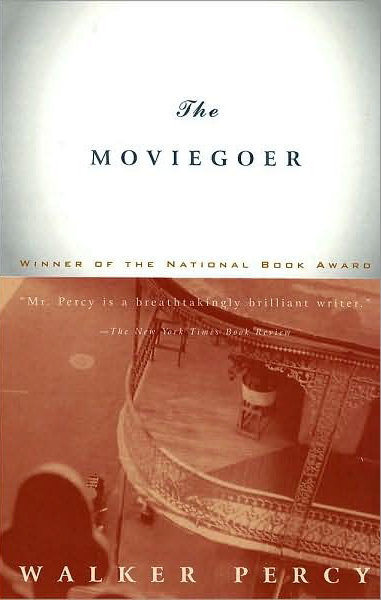
Over 50 years ago, novelist Walker Percy fingered the wrist of post-WWII America to find this idea pulsing within.

In The Moviegoer, Percy paints his protagonist, Binx Bolling, as a dislocated individual—lost in suburbia and the art of moneymaking, yet oddly ill at ease with nearly every aspect of existence. Binx seeks significance and transcendence in watching and re-watchiyoung_moviegoerng popular movies; the shared world of mass culture is more real to him than anything else. Through Binx (and one scene in particular where William Holden’s presence brightens an otherwise dull afternoon in the French Quarter), Percy describes how people and places are authenticated, not by their actual nature, but only when they are acknowledged by the transcendent reality of Hollywood.

This desire for worldly significance, to be on the radar of the kingmakers of politics and mass media, afflicts almost all Americans, and it has only metastasized since Percy first diagnosed it. Only rarely do we see it outright; more often it seeps into our thoughts and actions with hidden designs for otherwise innocent and noble work. Continue reading