Theology and Story: Marilynne Robinson

If you know me, you know that I am an unrepentant bibliophile of the highest order. You’ll also discover quickly that I freely recommend books to friends (and the odd stranger) across genres and generations. Yes, my wife and I even attained the recovering English major’s dream of launching a book club. All of this should be roughly as surprising as rain in April. “A wannabe writer who reads all the time? Gasp!”

Of the mountain of paper and ink (or e-ink—no hate for the Kindle here) that passes my eyes each year, novels make up a healthy proportion. I thoroughly enjoy well-wrought nonfiction on almost any subject, but the best fiction brings me back time and again. I seldom re-read nonfiction; good novels, like last night’s lasagna, are always better the next time around.

Why? The best fiction is true even in the made-up details—novels, short stories, and poetry plumb the depths of thought and  experience, giving them voice, teaching, reading you back. Aristotle said that poetry (a broader term then than now—we get our word “poem” from the Greek “ποιέμα”, which means “workmanship”) was better than either history or philosophy alone because it could articulate a principle (like philosophy) by showing an example of how it is lived out (like history).

In a previous job for a small (now-defunct) magazine, I reviewed lots of books, but didn’t have the opportunity to review works of fiction there. Our readers expected recommendations to equip them for preaching and ministry, making literature a low priority. Taste was also a consideration, as the quality of such works is somewhat “in the eye of the beholder” and it can take decades for the cream of a generation’s literary crop to rise. Continue reading
Moviegoing and Ministry

Originally from my blog at Disciple Magazine.

American culture thrives on the grandiose. “Bigger is better,” “Go big or go home,” “Too big to fail,” and the like are our taglines of choice. Anything we do is bound to be better if you toss a “mega”, “super”, or “hyper” out front.

Neither is the Church immune to this phenomenon (witness “megachurches” and “celebrity pastors” in case you have any doubts). It cuts across theological and denominational lines, to the point that we are not even aware of it or how it colors our witness. An implicit code demands every event or project we undertake be thoroughly planned, promoted, hyped, executed, well-attended, and measurable. If any step of that procedure is given short shrift, we question whether anything “really” happened.

Over 50 years ago, novelist Walker Percy fingered the wrist of post-WWII America to find this idea pulsing within.

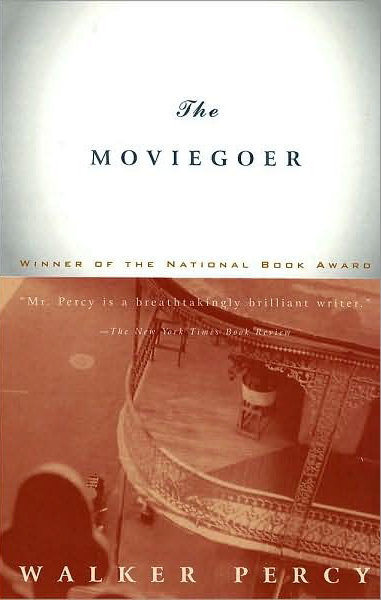
In The Moviegoer, Percy paints his protagonist, Binx Bolling, as a dislocated individual—lost in suburbia and the art of moneymaking, yet oddly ill at ease with nearly every aspect of existence. Binx seeks significance and transcendence in watching and re-watchiyoung_moviegoerng popular movies; the shared world of mass culture is more real to him than anything else. Through Binx (and one scene in particular where William Holden’s presence brightens an otherwise dull afternoon in the French Quarter), Percy describes how people and places are authenticated, not by their actual nature, but only when they are acknowledged by the transcendent reality of Hollywood.

This desire for worldly significance, to be on the radar of the kingmakers of politics and mass media, afflicts almost all Americans, and it has only metastasized since Percy first diagnosed it. Only rarely do we see it outright; more often it seeps into our thoughts and actions with hidden designs for otherwise innocent and noble work. Continue reading